The ENHANCE project has officially started its collaboration with ENFORCE, a Horizon Europe initiative focused on improving how environmental regulations are monitored, enforced, and supported through citizen-driven data.
This collaboration brings together two complementary perspectives: ➡️ ENFORCE, working at the interface between citizens and public authorities to make environmental data actionable for compliance and enforcement ➡️ ENHANCE, developing integrated data systems and services to better understand environmental pressures and their impacts
From environmental data to regulatory action
A key challenge in environmental governance is not only collecting data, but ensuring it is usable, reliable, and actionable within regulatory frameworks.
ENFORCE directly addresses this by developing:
Protocols and toolkits to align citizen-collected data with official standards
The Data Readiness Level (DRL) framework to assess whether data can be used as legal evidence
AI and geospatial tools to improve data validation and reliability
ENHANCE complements this by ensuring that such validated data can be:
Integrated with Earth Observation and environmental datasets
Contextualised within broader environmental systems
Transformed into services supporting policy and decision-making
Together, the projects create a stronger link between data collection, validation, and regulatory use.
Where the collaboration creates value
Rather than overlapping, ENHANCE and ENFORCE operate at different stages of the same value chain:
Making citizen data usable for compliance ENFORCE focuses on ensuring that citizen-generated data is fit-for-purpose and legally relevant. ENHANCE enables this data to be combined with other environmental sources, increasing its analytical value.
Connecting governance and environmental intelligence ENFORCE supports authorities in enforcing regulations and improving compliance mechanisms. ENHANCE provides the system-level understanding of environmental pressures, supporting more informed and forward-looking decisions.
Scaling participatory approaches ENFORCE structures collaboration through initiatives such as the ENFORCE Plaza, a pan-European hub for environmental compliance. ENHANCE contributes experience in stakeholder engagement and co-creation, ensuring that participatory approaches translate into usable outcomes.
Testing in real-world contexts ENFORCE validates its approaches across eight pilot sites in Europe, each addressing specific environmental challenges. ENHANCE builds on similar co-creation principles, ensuring that solutions are grounded in real user needs and operational conditions.
Towards stronger environmental governance in Europe
By connecting data systems with compliance mechanisms, this collaboration responds to a critical gap in environmental action: turning data into enforceable, policy-relevant evidence.
The combined efforts of ENHANCE and ENFORCE contribute to:
More credible and usable environmental data
Stronger collaboration between citizens and authorities
More effective implementation of environmental policies
This joint approach supports the broader ambition of the EU Green Deal and the development of a more integrated and participatory environmental governance framework in Europe.
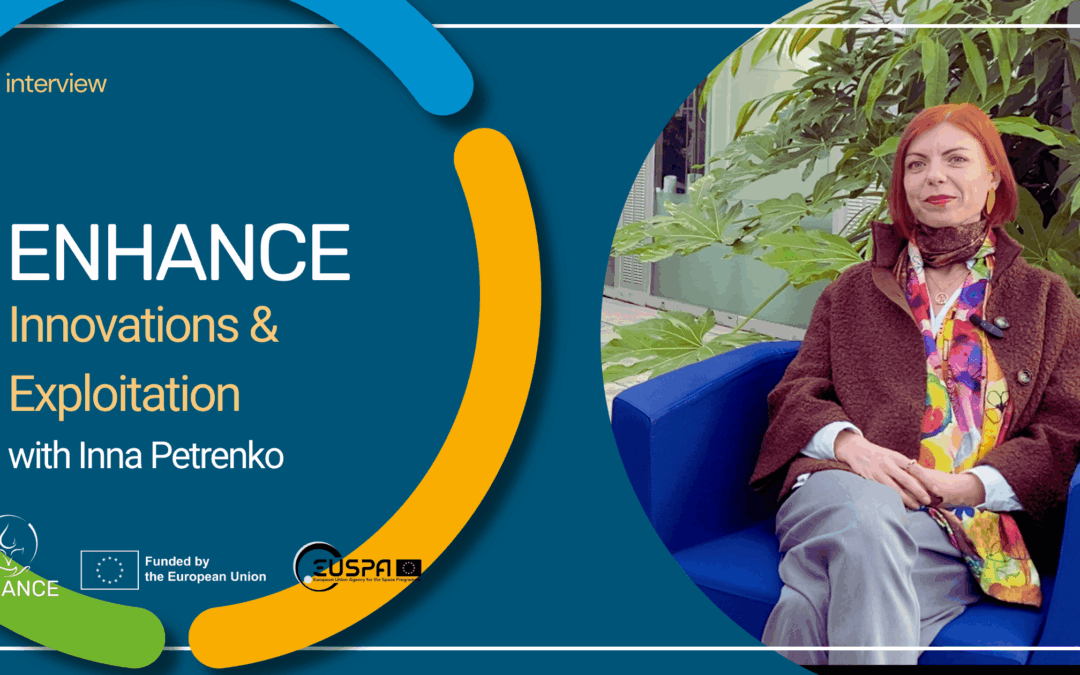
How can businesses anticipate and adapt to climate-related risks? In this video, InnaPetrenko from ENRICHGlobal highlights how innovative tools are helping bridge the gap between environmental data and strategic decision-making.
Developed within the ENHANCE project, the approach combines satellite data, modelling, and multiple data sources to support forward-looking business strategies. The objective is clear: enable organisations to anticipate disruptions, reduce risk, and strengthen long-term resilience.
Beyond risk mitigation, the work also reflects a broader shift—where sustainability becomes a competitive advantage. As market expectations evolve, businesses are increasingly encouraged to align performance with environmental responsibility.
Watch the video to explore how data-driven tools can support more resilient and sustainable business models:
A new collaboration between the ENHANCE and MI-TRAP projects is set to unlock synergies in how environmental data is generated, integrated, and used to support decision-making.
While MI-TRAP advances the monitoring and analysis of transport-related air pollution in urban environments, ENHANCE brings a complementary dimension through its One Health approach to coastal management, integrating environmental, human, and ecosystem health perspectives.
Connecting air quality monitoring with integrated environmental intelligence
MI-TRAP develops innovative monitoring instrumentation and analytical tools to track pollutants, assess transport emissions, and evaluate their impact on air quality and health.
ENHANCE builds on this type of data by delivering a data fusion infrastructure capable of integrating multiple data streams — including Copernicus Marine data, EGNSS services, and citizen science inputs — into a unified framework for environmental intelligence.
Through this synergy, insights from MI-TRAP’s urban air quality monitoring can be better contextualised within broader environmental systems, including coastal and climate-related pressures.
Key areas of collaboration
The collaboration focuses on concrete complementarities between the two projects:
Citizen science and data co-creation MI-TRAP actively engages citizens in air quality monitoring and awareness. ENHANCE extends this by integrating citizen-generated data into operational services, ensuring it contributes directly to environmental assessments and decision-support tools.
Advanced data integration and interoperability MI-TRAP produces high-resolution, real-time data on transport emissions. ENHANCE contributes a robust data collection and fusion architecture, designed to enable real-time data communication and interoperability across heterogeneous sources, including satellite and in-situ observations.
From environmental data to decision-support services MI-TRAP supports the evaluation of mitigation measures and regulatory effectiveness. ENHANCE goes a step further by developing three dedicated services/products to analyse environmental pressures (urban, agricultural, climate extremes) and their impacts under a One Health framework, directly supporting policymakers and stakeholders.
Co-creation and Living Labs Both projects adopt participatory approaches. ENHANCE operationalises this through structured stakeholder engagement and co-creation processes, ensuring that solutions are aligned with user needs and validated in real-world coastal case studies.
Towards integrated, cross-domain environmental solutions
This collaboration highlights the importance of connecting environmental domains that are often addressed separately.
By linking urban air quality monitoring (MI-TRAP) with integrated coastal and environmental intelligence systems (ENHANCE), the two projects contribute to a more holistic understanding of environmental pressures and their impacts on ecosystems and human health.
Ultimately, this joint effort supports the transition towards more connected, data-driven, and participatory environmental governance in Europe, in line with the ambitions of the EU Green Deal and the Zero Pollution Action Plan.
How do we truly understand the impact of climate-driven disasters on communities? A new video featuring Professor Christy Laspidou explores an emerging approach that connects human, animal, and environmental health into one unified framework.
Strengthening Coastal Resilience Through One Health
Focusing on a case study in Central Greece, the video reflects on the cascading effects of extreme weather events—from flooding to ecosystem disruption—and what they reveal about the vulnerabilities of coastal regions today.
Rather than treating health in isolation, this work introduces a structured way to assess how interconnected systems respond under pressure. By combining satellite data with citizen-driven observations, the approach aims to support more informed decision-making and future policies.
Watch the video to discover how science, data, and cross-sector collaboration are shaping a more integrated understanding of resilience.
How can communities help us better understand marine ecosystems? In this video, researcher Jaume Piera shares how local engagement is transforming data collection in both urban and rural coastal environments.
Citizen Science Driving Coastal Knowledge
From the beaches of Barcelona to the agricultural landscapes of the Ebro Delta, the work highlights how different settings face distinct environmental pressures—and how citizen participation can help capture these dynamics in real time.
At the core of this effort is a growing community of volunteers contributing observations on marine biodiversity. But turning this raw, uneven data into meaningful insights remains a key challenge.
Watch the video to see how citizen science is advancing coastal monitoring and shaping future environmental management.