Introducing the ENHANCE Project and the One Health Approach
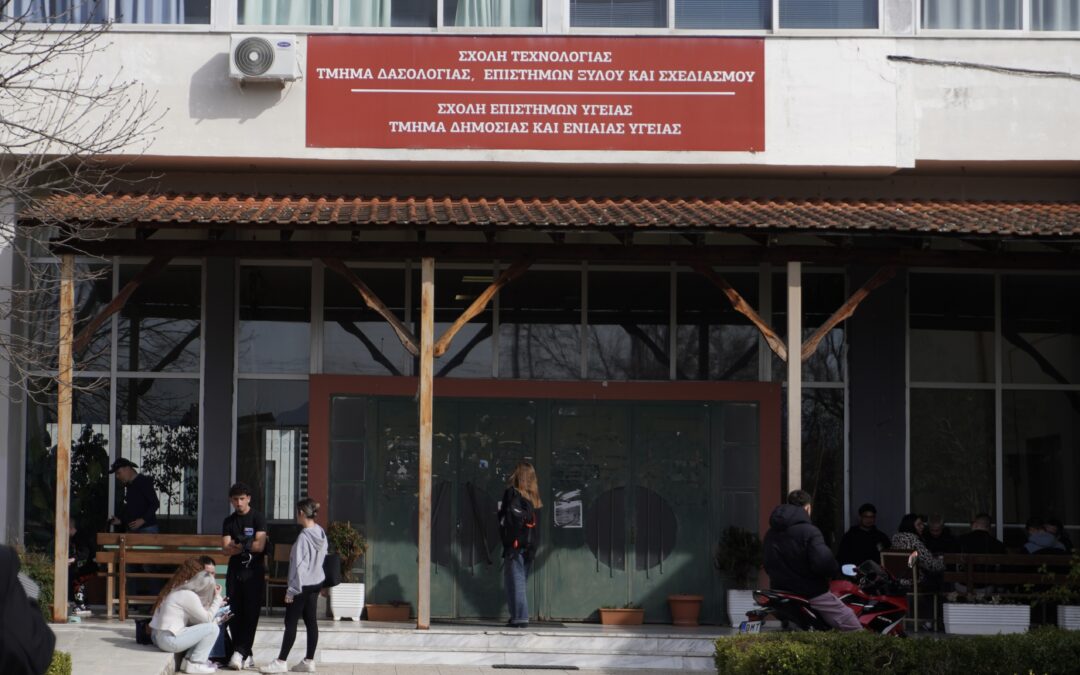
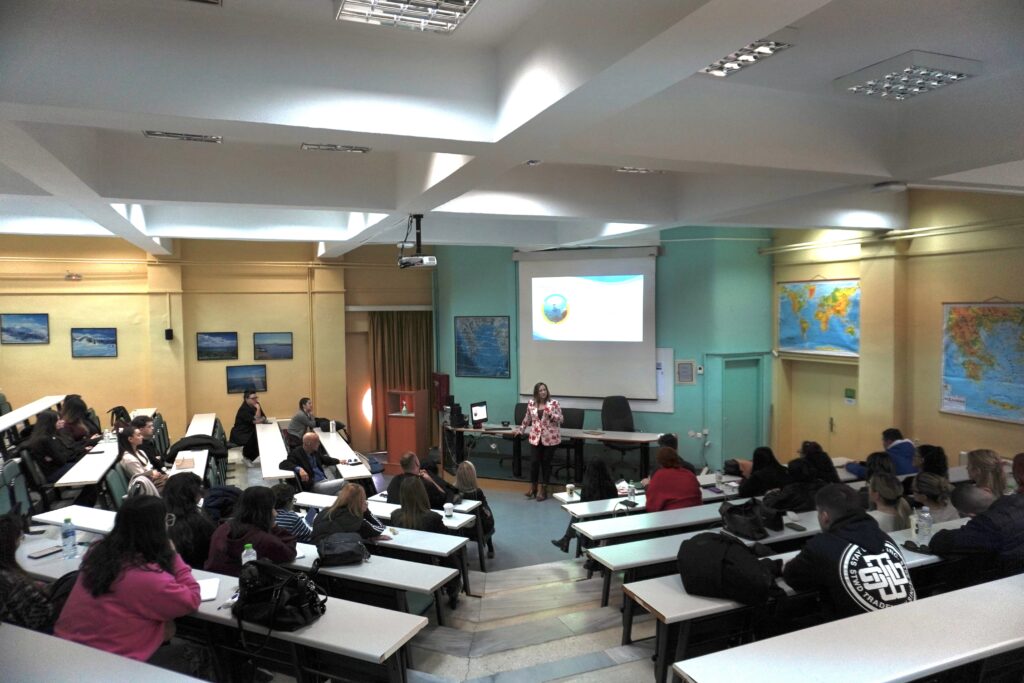
On 6 March 2026, the workshop “ENHANCE Living Lab | Co-creating One Health” took place at the Department of Public and One Health of the University of Thessaly as part of the Environmental Health course. The event brought together 69 participants, including 56 students, and introduced the ENHANCE project while involving participants in testing its developing digital tools.
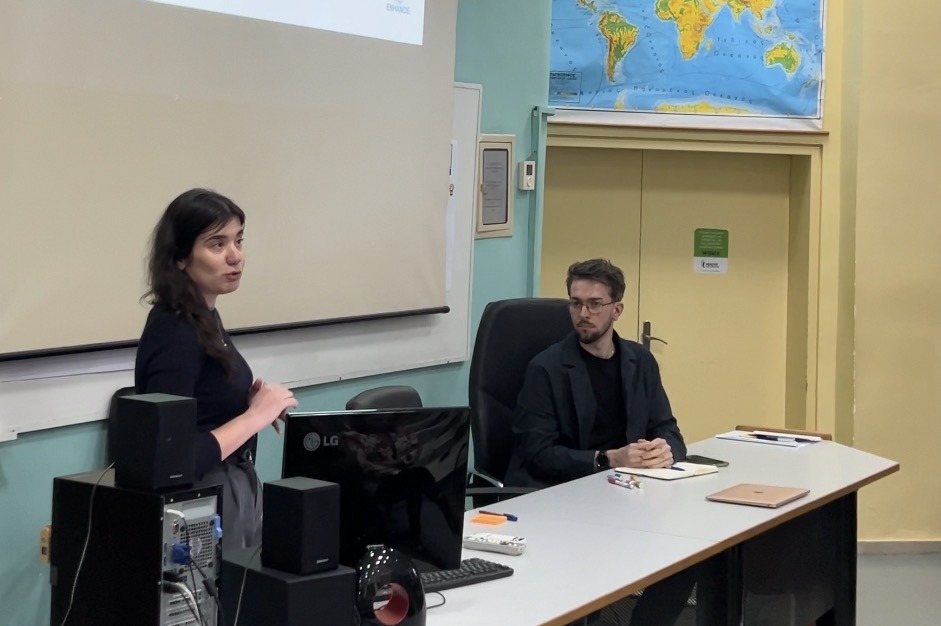
The workshop opened with a presentation by Professor Chrysi Laspidou, Vice-Rector for Innovation, Internationalization, Collaborations and Digital Governance at the University of Thessaly and Scientific Coordinator of ENHANCE at the university. She presented the project’s One Health approach to coastal management, highlighting how ENHANCE combines scientific research, satellite data and technological tools to support sustainable coastal ecosystem management.
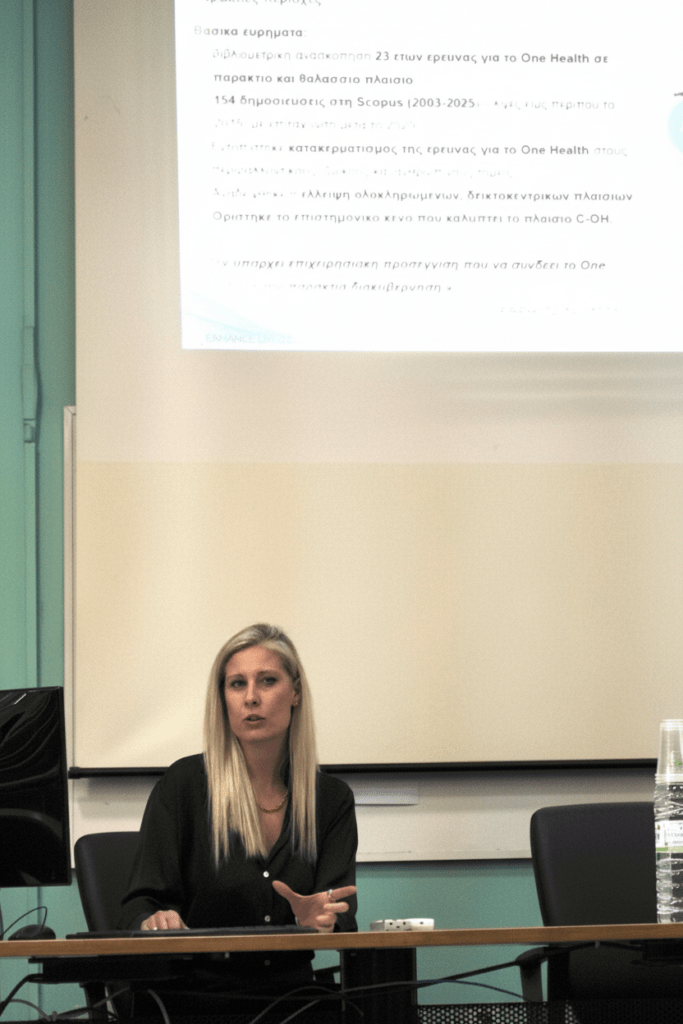
Researchers from the project team then presented key scientific aspects of ENHANCE. Dr. Alexandra Ioannou introduced the project’s One Health framework for coastal risk assessment, Dr. Evmorfia Bataka explained the sampling protocol linking satellite and field data, and Nikolaos Kokosis, PhD candidate at the University of Thessaly, presented approaches for risk quantification in coastal environments.
Chrysi Laspidou talking to the audience of the University of Thessaly
Testing the ENHANCE Toolkit Through Co-creation
A central part of the workshop was a participatory co-creation exercise where participants tested the prototype ENHANCE Toolkit. The activity, coordinated by researchers from AMARANTHUS, aimed to gather feedback from potential users to improve the platform’s design and functionality.
Participants explored two use cases: one designed for swimmers and divers and another for teachers. Discussions focused on the accessibility and usability of the toolkit, including data availability, map resolution, and the need for clear visualisations that are understandable to different user groups. Participants also highlighted the importance of training materials and long-term sustainability to ensure broader adoption of the platform.
Chrysi Laspidou (left) & Alexandra Ioannou (right)
Feedback to Improve the Toolkit
Several ideas were proposed to improve the toolkit. These included water quality and safety notifications, integration of citizen observations, and connections with other environmental platforms. For educational applications, participants suggested integrating the toolkit into teaching activities through learning resources, scenario-based exercises, quizzes, and access to scientific literature.
Overall, the workshop demonstrated the value of co-creation in developing accessible digital tools that support research, education, and citizen engagement in coastal sustainability. The feedback collected will help further refine the ENHANCE Toolkit and strengthen its role in promoting the One Health approach to coastal ecosystem management.
Georgia Tseva and Argyrios Balatsoukas presenting the ENHANCE project
ENHANCE has released a new factsheet highlighting the role of citizen science in supporting coastal monitoring and environmental decision-making.
By enabling citizens to share observations of marine species and coastal ecosystems, citizen science helps complement satellite and scientific data. Within ENHANCE, these contributions are collected through the MINKA platform and combined with Copernicus Marine Service data via the project’s Data Exchange Platform and One Health Toolkit.
The factsheet also presents how citizen science activities are implemented in the Barcelona Urban Beaches and Ebro Delta case study, where divers, coastal users, schools and local organisations contribute biodiversity observations that support research and coastal management.
More broadly, the factsheet highlights how citizen participation in science contributes to the objectives of the European Green Deal, strengthening environmental monitoring and promoting more inclusive approaches to coastal governance.
How will the ENHANCE One Health framework be translated into a practical, user-oriented digital platform?
Deliverable D2.2 – First Version of the ENHANCE Scenarios & Platform Specifications presents the initial design of the ENHANCE AI-enabled toolkit for coastal management ENHANCE_D2.2_CSIC_FINAL_do not …. It marks the transition from conceptual framework (D2.1) to concrete user scenarios, technical requirements, and platform architecture.
This deliverable focuses on co-creation and services co-design. Building on stakeholder engagement activities, it identifies user needs across the two pilot regions — Barcelona Metropolitan Beaches & Ebro Delta and Pagasitikos Gulf — and translates them into structured user stories, requirements, and technical use cases.
D2.2:
Defines 15 user stories across public health, aquaculture, agriculture, tourism, education, and policy sectors
Extracts 47 user requirements, structured across implementation, data collection, analytics, visualisation, and governance
Develops preliminary technical use cases (alerts, risk maps, sustainable aquaculture monitoring, training modules)
Designs the first user flow and access-level logic for the ENHANCE platform
Establishes a multi-layer conceptual architecture, covering data ingestion, governance, AI analytics, APIs, infrastructure, and user-facing dashboards
Aligns the platform with Copernicus and EGNSS services, anticipating integration of satellite, in-situ, and citizen science data
The deliverable outlines a phased, iterative methodology combining workshops, technical translation, prototyping, and usability refinement. It sets the technical direction for the development work under WP3, ensuring that the ENHANCE toolkit remains user-driven, interoperable, and aligned with One Health objectives.
D2.2 acts as the operational blueprint for the ENHANCE platform — transforming stakeholder needs into system design and defining how data will flow from satellite and field sources to actionable coastal management tools.
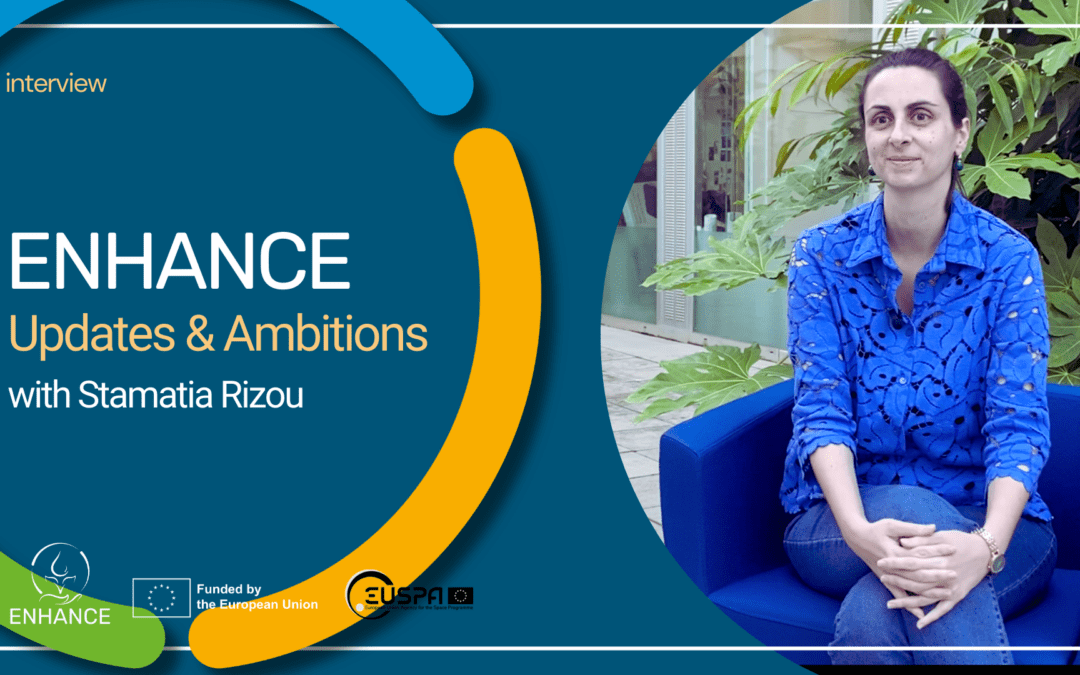
In a newly released video, Stamatia Rizou, Project Coordinator of ENHANCE and R&D Manager at SingularLogic, presents the project’s progress and outlines the next steps in the development of the ENHANCE platform.
First-Year Milestones
During its first year, ENHANCE has achieved several key milestones:
Establishment of Living Labs in two Mediterranean case studies
Identification and engagement of relevant regional stakeholders
Definition of the methodological framework and selection of key indicators
Specification and prioritisation of platform use cases
Initial front-end design and technical architecture development
These foundational activities are shaping the structure and functionality of the ENHANCE platform.
Moving from Design to Development
With the conceptual and methodological groundwork in place, the project now enters a new phase. Development of the core tools is beginning, alongside early validation and evaluation activities that will prepare the ground for pilot implementation in the case study regions.
The upcoming months will focus on translating design specifications into operational digital services capable of supporting sustainable and climate-resilient coastal management.
Coastal areas sit at the intersection of environmental integrity, human health, and economic activity. Yet they are increasingly exposed to climate change, urbanisation, tourism, and agricultural pressures.
Deliverable D2.1 – Development of the ENHANCE One Health Framework for Coastal Management establishes the conceptual and methodological backbone of the ENHANCE project. It defines how the One Health approach is operationalised for coastal environments, recognising the interdependence between ecosystem health, biodiversity, water quality, and human well-being.
The deliverable:
Introduces the ENHANCE One Health conceptual framework
Defines key pressure categories affecting coastal zones (urban, agricultural, and climate extremes)
Maps the links between environmental stressors and impacts on biodiversity and public health
Structures the indicators and analytical components that will underpin ENHANCE tools
Provides the scientific and methodological basis for future validation activities
D2.1 translates the One Health concept into a practical framework tailored to coastal management. It sets the foundation for integrating Earth observation data, citizen-generated data, and advanced analytics into coherent decision-support services.