From Microbes to Coastlines: UTH Researchers Chart Global One Health Trends in Our Oceans

From Microbes to Coastlines: UTH Researchers Chart Global One Health Trends in Our Oceans

Researchers from the University of Thessaly (UTH)Alexandra Ioannou, Evmorfia Bataka, Nikolaos Kokosis, Charalambos Billinis, and Chrysi Laspidou — have published the first comprehensive bibliometric review of how the One Health framework is applied in coastal and marine ecosystems.

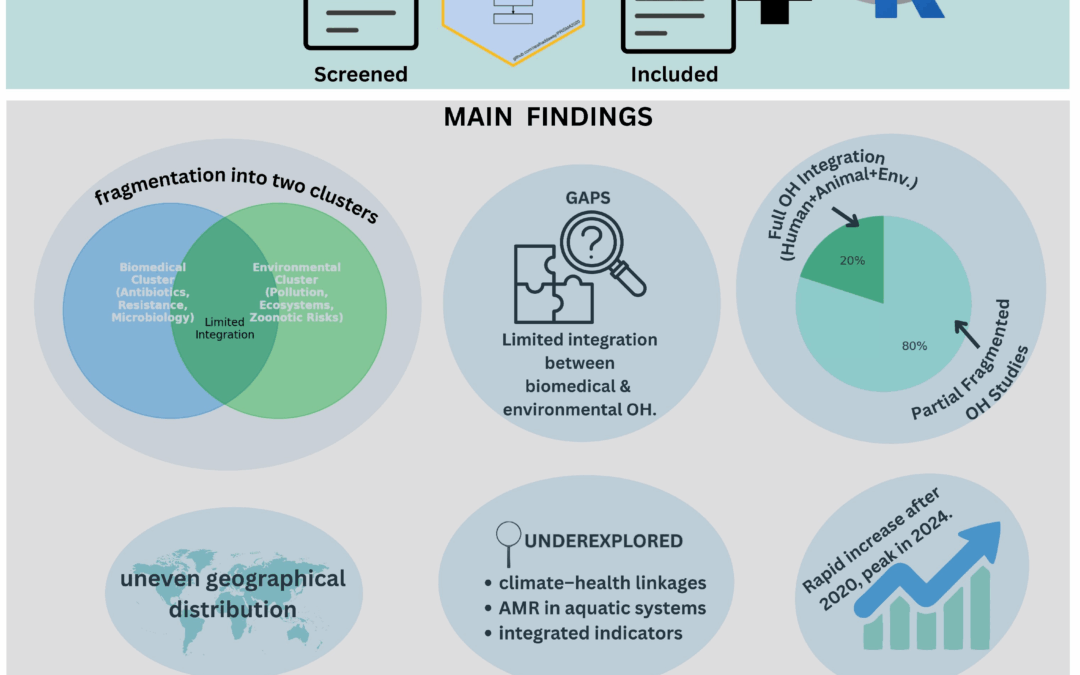
Analyzing over 150 publications from 2003–2025, the study reveals a rapid surge in research after 2020, peaking at 37 papers in 2024, but finds that fewer than 20% of studies fully integrate human, animal, and environmental health dimensions.
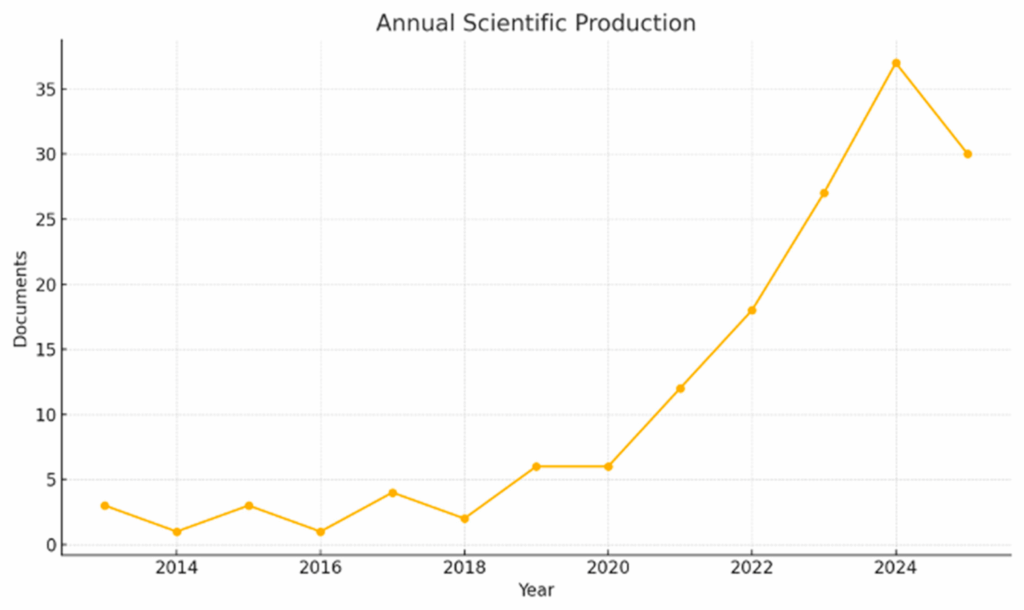
Annual scientific production on One Health in coastal and marine contexts (2013–2025). The output remained low and inconsistent until 2018, then increased sharply after 2020, peaking at 37 publications in 2024 and maintaining high levels in 2025.

Main findings:

  • Research remains divided between biomedical (antibiotics, antimicrobial resistance, microbiology) and environmental (pollution, microplastics, eutrophication, HABs) clusters.
  • Scientific output is concentrated in high-income countries such as the USA, Brazil, and the UK, while low- and middle-income coastal regions remain underrepresented.
  • Only a handful of journals serve as core publication outlets, highlighting both growth and fragmentation in the field.
  • Climate–health linkages and integrated indicators such as chlorophyll-a and microplastics are underexplored, despite their relevance for policy and monitoring.
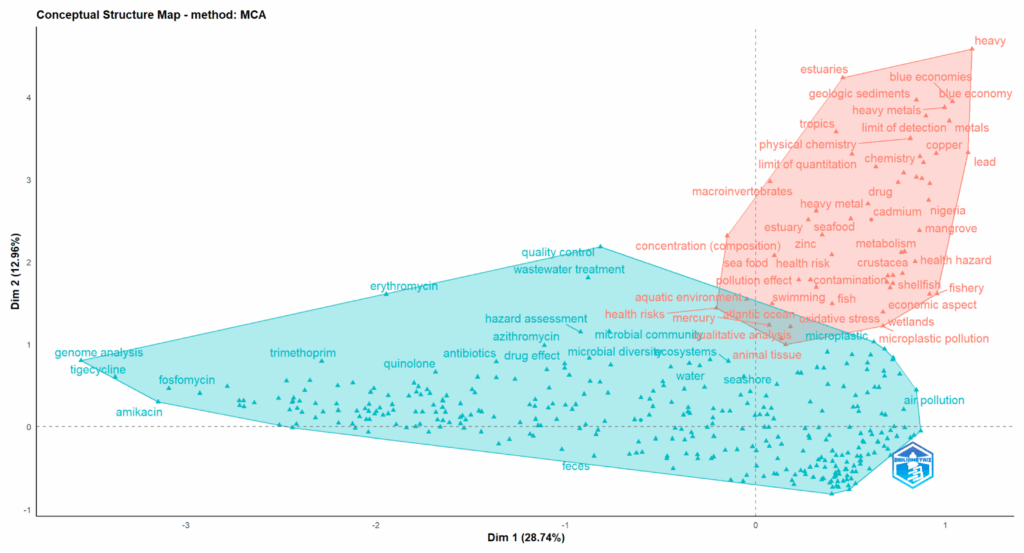
Two main clusters are identified: (i) a biomedical and microbiological cluster on the left, centered on antibiotics, resistance mechanisms, and clinical studies; and (ii) an environmental cluster on the right, associated with heavy metals, microplastics, and ecosystem-related terms.

“Our findings highlight both the promise and the imbalance of One Health research in coastal systems,” said lead author Chrysi Laspidou. “To protect both ecosystems and communities, we must build stronger bridges between environmental and biomedical research — and ensure that vulnerable coastal regions are not left behind.”

The study provides an evidence base for embedding One Health into coastal monitoring, climate adaptation, and governance, contributing to progress toward the UN Sustainable Development Goals.

📘 Read the entire publication here: Coastal and Marine One Health: A Bibliometric Review (2003–2025)
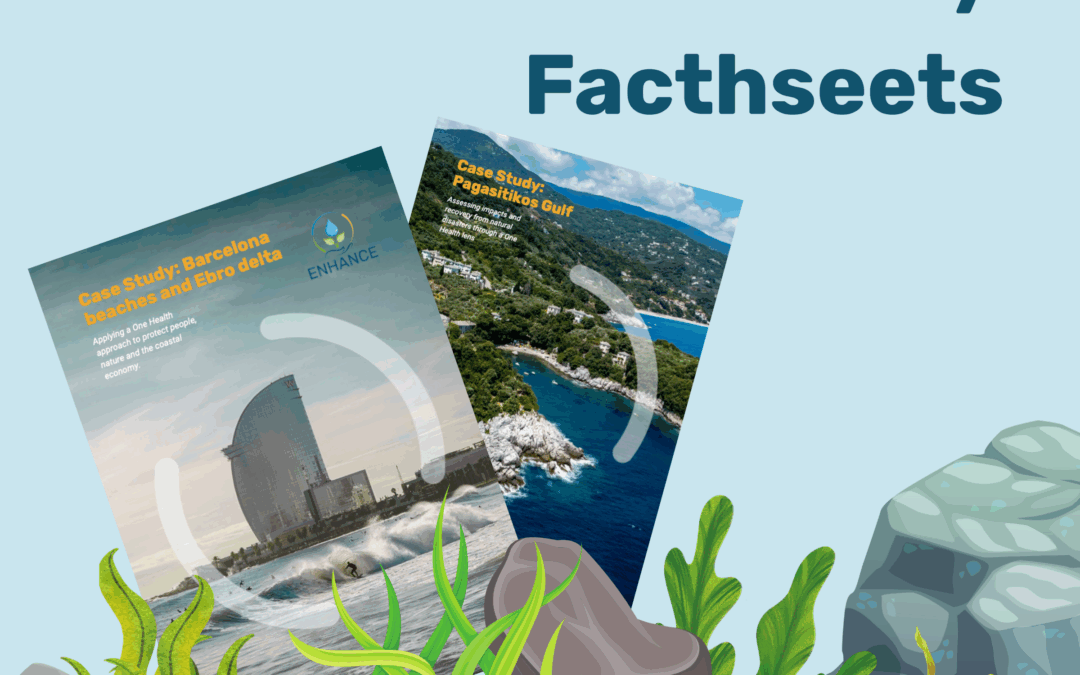
ENHANCE Case Study Factsheets: Barcelona Urban Beaches, Ebro Delta & Pagasitikos Gulf in a Nutshell

ENHANCE Case Study Factsheets: Barcelona Urban Beaches, Ebro Delta & Pagasitikos Gulf in a Nutshell

The ENHANCE project is proud to announce the release of its first two case study factsheets, offering a closer look at how the project is addressing pressing challenges in Mediterranean coastal zones.

Coastal areas are vital spaces for biodiversity, recreation, and local economies, but they face growing pressures from human activity and climate change. With a One Health approach, ENHANCE combines Earth Observation, citizen science, and stakeholder engagement to better understand these complex systems and support more sustainable coastal management.

Case Study 1 – Barcelona and the Ebro Delta (Spain)

Led by the Spanish National Research Council (CSIC), this case study focuses on the Barcelona Metropolitan Area’s urban beaches and the Ebro Delta.

  • Urban beaches: visited by nearly 10 million people annually, these beaches are under intense human pressure, suffering from erosion, biodiversity loss, and the impacts of frequent storms.
  • Ebro Delta: one of Spain’s most important agricultural areas, heavily influenced by rice farming and aquaculture, which affect water quality and local ecosystems.

By combining Copernicus satellite data with participatory biodiversity monitoring, the case study aims to track eutrophication, sand erosion, and the impacts of agriculture and aquaculture on coastal waters

Read the factsheet here: English / Catalan

Case Study 2 – Pagasitikos Gulf (Greece)

Led by the University of Thessaly (UTH), this case study explores how ecosystems recover from extreme climate events. In September 2023, catastrophic floods devastated Thessaly, washing pollutants, debris, and pathogens into the Pagasitikos Gulf.

  • The floods left severe ecological damage, with sediments, agrochemicals, and bacteria threatening both marine life and public health.
  • Researchers and citizen scientists are now monitoring how long it takes the Gulf’s ecosystem to “bounce back” — or whether it shifts permanently to a new, degraded state

This case study provides crucial knowledge for climate resilience, linking environmental monitoring with human and animal health concerns.

Read the factsheet: English

Stay tuned for upcoming releases as ENHANCE continues to work with local communities, scientists, and policymakers to co-create solutions for more sustainable and resilient coasts.

Privacy Overview

This website uses cookies so that we can provide you with the best user experience possible. Cookie information is stored in your browser and performs functions such as recognising you when you return to our website and helping our team to understand which sections of the website you find most interesting and useful.