
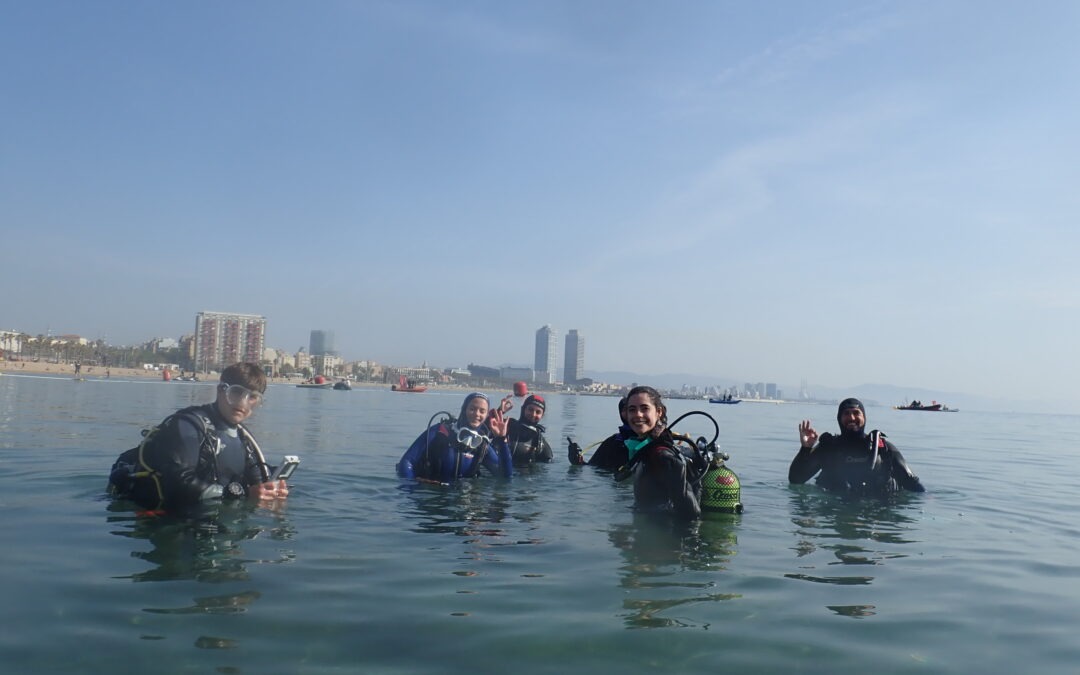
The Barcelona Metropolitan Area joins the global City Nature Challenge with more than 3,200 biodiversity observations through the MINKA platform
From April 25 to 28, the EMBIMOS research group from the Institut de Ciències del Mar (ICM-CSIC), together with the Institut Botànic de Barcelona (IBB), coordinated a new edition of BioDiverCiutat, the Barcelona Metropolitan Area’s contribution to the international City Nature Challenge. This was the first edition co-organised with the IBB, strengthening the collaboration between marine and terrestrial biodiversity research communities.
This edition of BioDiverCiutat was supported by the European projects ECS, ANERIS, CSMACH1 and ENHANCE.
During the four-day event, 53 participants recorded more than 3,270 biodiversity observations through the MINKA citizen science platform, documenting a total of 794 species across the metropolitan region.
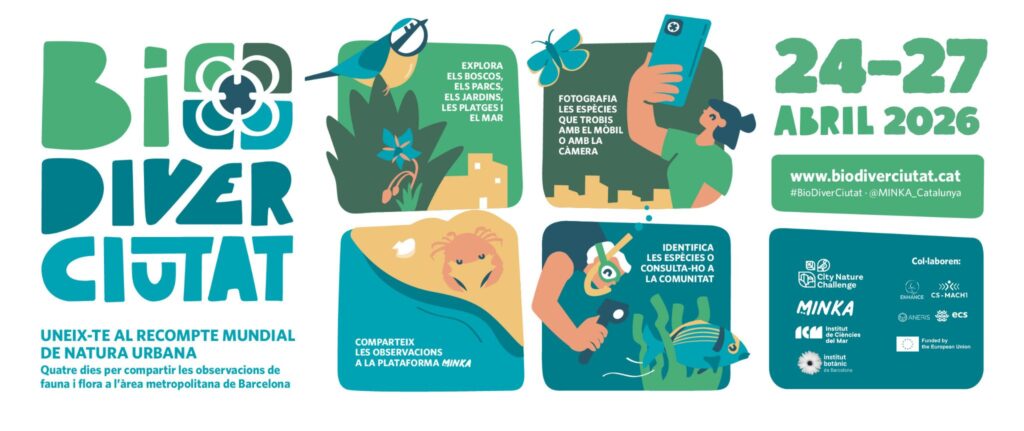
According to the official City Nature Challenge 2026 results, the Barcelona Metropolitan Area ranked 204th worldwide in number of species recorded among the 754 participating cities globally. In Spain, 19 municipalities participated in the challenge, including Alicante, Pamplona, Sevilla and Zaragoza, among others. Barcelona once again ranked first in the country both in number of observations and number of species recorded.
The observations collected during the event reveal the remarkable biodiversity still present in urban and peri-urban environments. Marine species represented 57% of the documented biodiversity, while terrestrial species accounted for 43%. Plants were the most represented group, followed by insects and molluscs, especially marine molluscs.
New biodiversity records and notable findings
The BioDiverCiutat 2026 dataset generated several significant biodiversity findings. A total of 90 non-native species were documented, including 35 considered invasive according to the EXOCAT information system for alien species in Catalonia. Among the most notable observations were the invasive Asian hornet (Vespa velutina), the Asian brown alga (Rugulopteryx okamurae), and the invasive coral Oculina patagonica.
The event also documented 42 protected species, including two threatened species listed under Catalan conservation regulations: Audouin’s gull (Ichthyaetus audouinii), classified as endangered, and the little owl (Athene noctua), classified as vulnerable.
In addition, 10 species were identified for the first time on the MINKA platform, most of them insects and marine molluscs. Several marine molluscs and algae represented particularly relevant records for the Barcelona coastline, including Elysia translucens, Goniodoridella picoensis, Tayuva maculosa, and the alga Dictyota dichotoma var. intricata.
The observations also highlighted the scientific value of citizen science for biodiversity monitoring. Of the 685 strictly identified species recorded during the challenge, 110 had not previously been cited in the Biodiversity Data Bank of Catalonia (BDBC) within the metropolitan area, while 11 species were not previously registered in GBIF for the same area. Researchers summarised these findings as six species newly recorded for the Barcelona coastline.
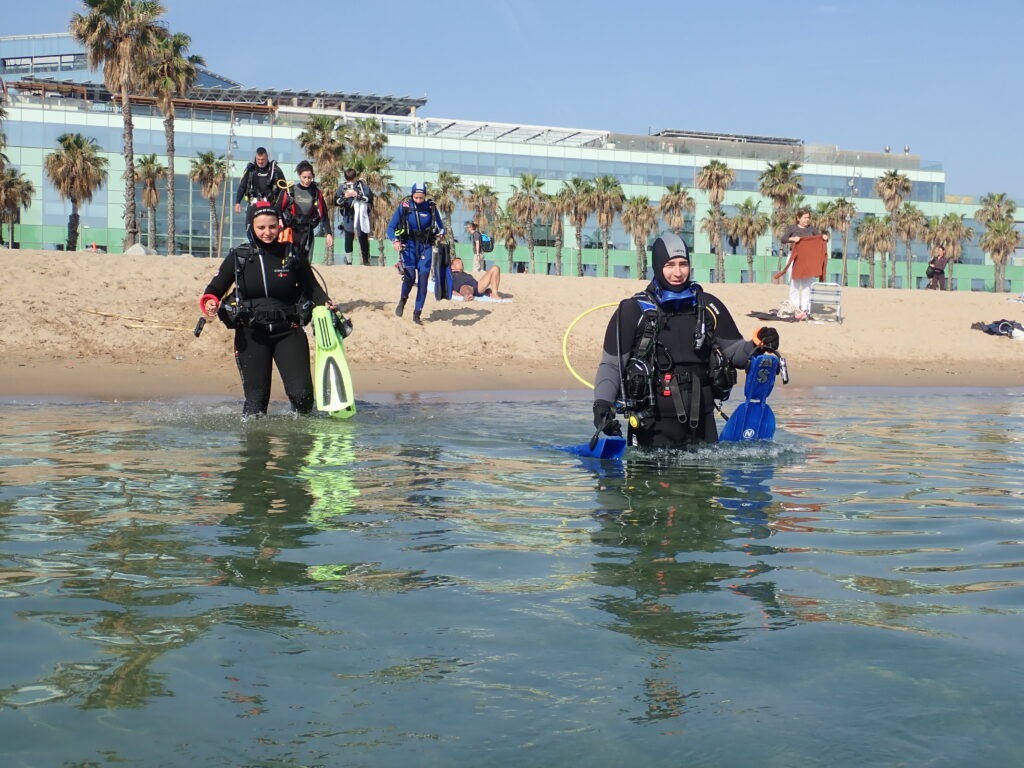
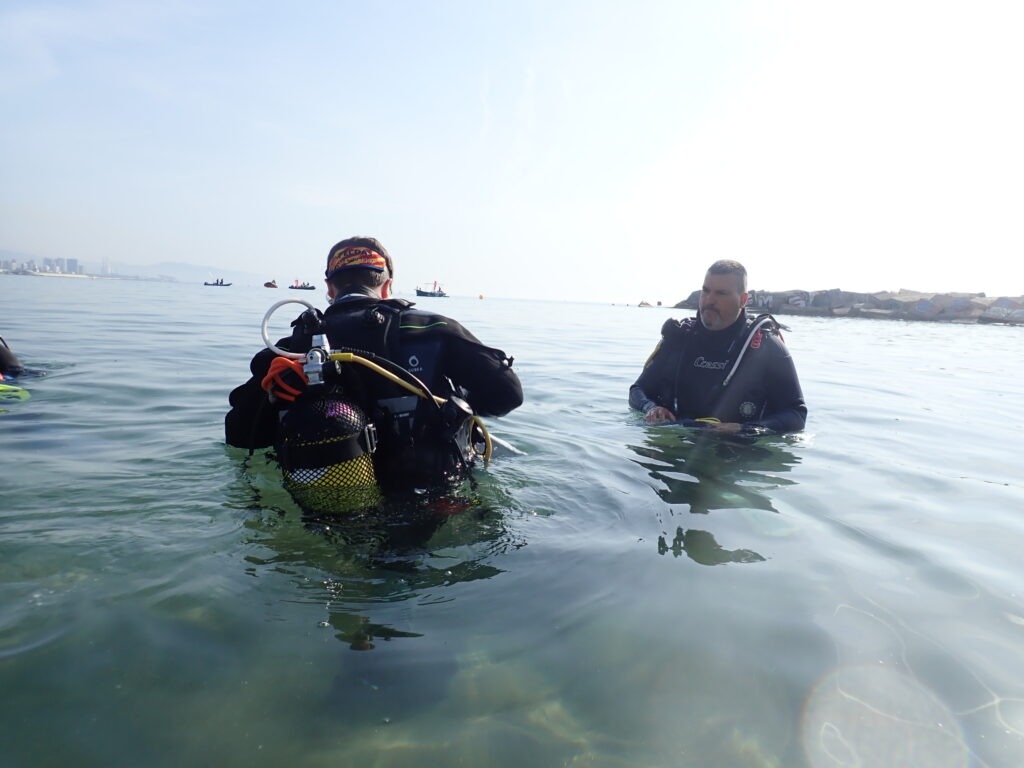
Urban biodiversity through citizen science
Despite restricted access this year to parts of Collserola Natural Park, which may have reduced terrestrial participation, the event documented a highly diverse range of organisms including plants, insects, molluscs, birds, fish, crustaceans, sponges, and tunicates.
The final dataset included:
- 284 plant taxa
- 109 insect taxa
- 85 mollusc taxa
- 67 bird taxa
- 52 fish taxa
- 27 crustacean taxa
- 15 sponge taxa
- 15 tunicate taxa
Globally, the City Nature Challenge 2026 brought together 106,354 participants across 754 cities in 61 countries and 6 continents, generating more than 3 million biodiversity observations and documenting over 75,000 species worldwide. The Common Dandelion (Taraxacum officinale) was once again the world’s most observed plant species, while the Mallard (Anas platyrhynchos) ranked as the most observed animal species.
About the event
BioDiverCiutat is a citizen science initiative that invites people to discover and document urban biodiversity through the MINKA platform. The event forms part of the global City Nature Challenge, an international competition encouraging cities worldwide to collectively record as much biodiversity as possible over four days. The initiative demonstrates the important role that citizens can play in biodiversity monitoring, environmental awareness, and conservation research.
Credit Pictures: Andrea Comaposada