
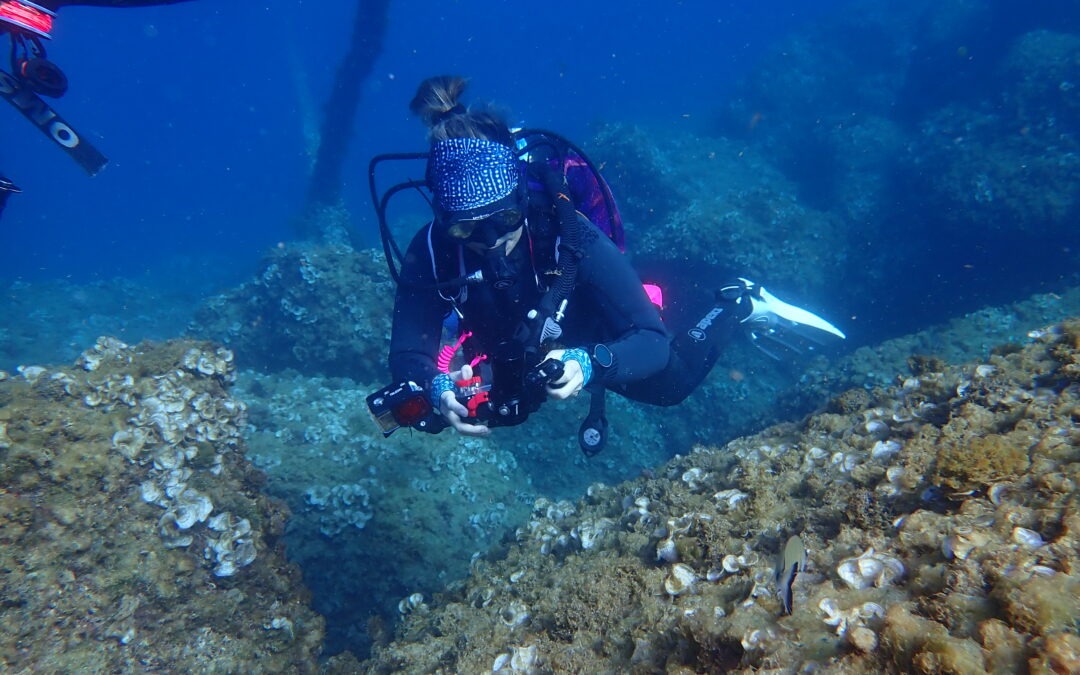
Citizen scientists have already documented 1,467 taxa along the Catalan coast through MINKA, with contributions from 282 observers and 76 identifiers. The records include 29 invasive alien species and 97 taxa with direct legal protection.
BioMARató 2026, running from 2 May to 15 October, has reached the halfway point with 46,920 biodiversity observations submitted to the BioMARató 2026 (Catalonia) project on the MINKA citizen science platform. The data, accessed on 29 July, cover 1,467 different taxa, including species and genera, and represent one of the largest verifiable marine biodiversity datasets generated through citizen science in Catalonia this year.
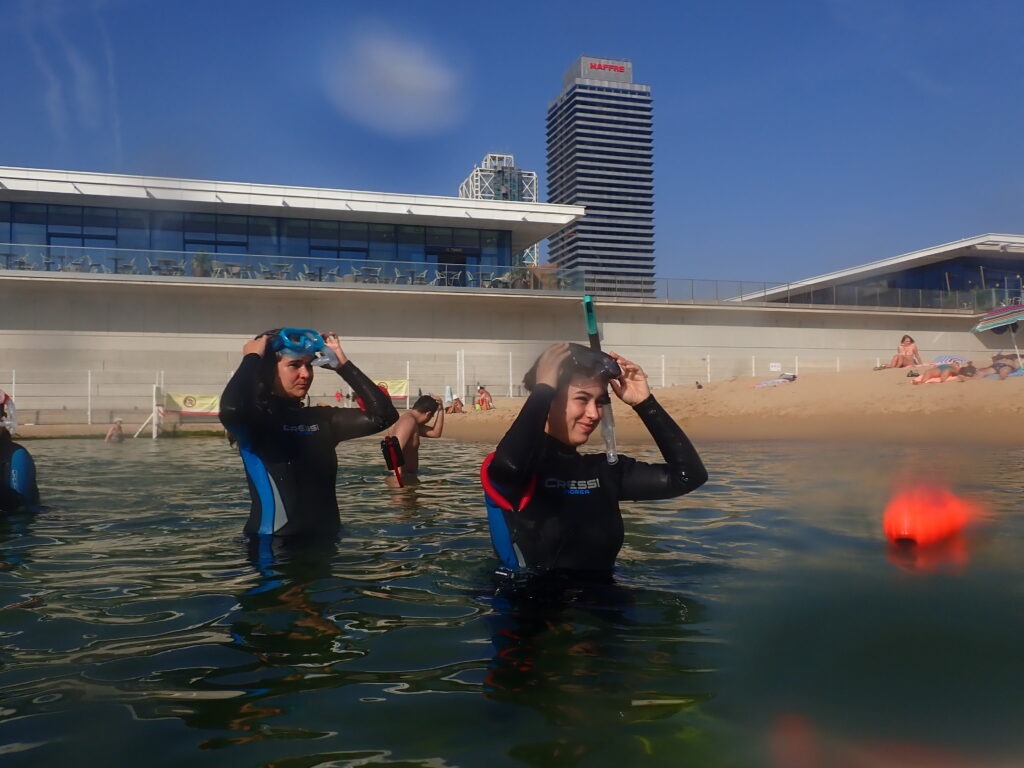
These results have been made possible by the involvement of hundreds of participants and the collaboration of the 2026 mobilising organisations: Federació d’Activitats Subaquàtiques (FECDAS), Anèl·lides Serveis Ambientals Marins, Plàncton Diving, Oceánicos, and All Blue Diving. So far, 282 accounts have shared biodiversity photographs on MINKA, while 76 identifiers have helped validate the records and improve their taxonomic identification. The initiative is supported by the EMBIMOS research group at the Institute of Marine Sciences (ICM-CSIC), which manages the MINKA platform.
The figures highlight the potential of citizen science to expand knowledge of the distribution of coastal and marine biodiversity. However, the number of observations should not be interpreted as a measure of abundance. It reflects participant activity and is influenced, for example, by site accessibility and by how easy each organism is to detect and photograph. Fish currently account for 41.2% of all observations, followed by molluscs (11%), cnidarians (8.2%), sponges (7.2%) and echinoderms (5.7%).
Citizen scientists record 29 invasive alien species
The mid-season dataset includes 784 observations of 63 species classified as alien, 29 of which are listed as invasive alien species according to EXOCAT and/or the Spanish Catalogue of Invasive Alien Species.
These observations are valuable for mapping the presence of alien species and detecting potential new hotspots. Although the number of observations does not correspond to the number of individuals or the area occupied, it provides a useful indicator for tracking these species over time.
Among the algae, the red alga Asparagopsis taxiformis stands out: with 177 observations, it is the most frequently recorded invasive species to date. A Mediterranean study associated dense stands of this alga with reduced habitat complexity and biodiversity compared with native algal forests. BioMARató data help document its presence and detection frequency along the Catalan coast. A further 20 observations of Asparagopsis armata, another invasive red alga, have also been recorded. Both species had already been reported in previous editions.
The Asian brown alga Rugulopteryx okamurae has been observed in the provinces of Barcelona and Girona. The species is included in the Spanish Catalogue of Invasive Alien Species and is covered by a national control strategy. Spain’s Ministry for the Ecological Transition and the Demographic Challenge (MITECO) notes that it can extensively colonise hard substrates and affect native benthic communities, making the mapping of detections particularly relevant. Observations of the invasive green alga Caulerpa cylindracea have also been recorded in all three coastal provinces.
Two invasive crab species are also noteworthy. Percnon gibbesi has been recorded 44 times. This alien herbivorous crab has spread rapidly across the Mediterranean, underlining the importance of continued monitoring. The blue crab (Callinectes sapidus), meanwhile, has been observed along the entire Catalan coastline.
Protected and threatened species recorded
Citizen observations have also documented numerous protected species. To date, 97 taxa with direct legal protection have been recorded under the Catalan, Spanish, European or international regulations consulted. Of these, four are listed as endangered and 20 as vulnerable. In addition, 23 taxa are included in Annex II of the SPA/BD Protocol, which covers endangered or threatened Mediterranean species.
Taxa listed as endangered include two brown algae that form underwater forests, Cystoseira foeniculacea and Gongolaria squarrosa, both included in this category in the Catalogue of Threatened Flora of Catalonia. These algae provide structure and shelter for many marine organisms. Among the birds, Audouin’s gull (Ichthyaetus audouinii) is also listed as endangered in Catalonia.
Two elasmobranchs stand out among the taxa included in Annex II of the SPA/BD Protocol: the spiny butterfly ray (Gymnura altavela, 14 observations) and the bull ray (Aetomylaeus bovinus, six observations). According to the IUCN Red List, the bull ray is assessed as Critically Endangered both globally and in the Mediterranean. The spiny butterfly ray is assessed as Endangered globally and Critically Endangered in the Mediterranean. These records are particularly significant given the high extinction risk faced by both species.
BioMARató has also recorded the common bottlenose dolphin (Tursiops truncatus) and the short-beaked common dolphin (Delphinus delphis), both listed as vulnerable in Catalonia, together with vulnerable coastal birds such as the common tern (Sterna hirundo) and the pied avocet (Recurvirostra avosetta).
Another highlight is the Mediterranean pillow coral (Cladocora caespitosa), a habitat-forming cnidarian listed as vulnerable in Catalonia, for which 121 observations have been collected. This volume of records demonstrates BioMARató’s capacity to document benthic organisms of conservation interest, not only large or easily visible species.
BioMARató 2026 remains ongoing until 15 October. Until then, organisations, institutions and individual participants can join the initiative, submit new observations and help document biodiversity along the Catalan coast.
👉 Ready to join? Find out how to participate here:
https://biomarato.org/en/how-to-participate/
The event is carried out within the framework of the European projects ANERIS, CSMACH-1, ECS, ENHANCE and ENFORCE.